
The Ultimate Guide to Full-Body Home Workouts: Strength and Vitality Without the Gym

In this it might be very expensive to get gym membership, however there is always an alternative which is working out from home. The most effective tool for physical transformation is one you already own which is your body. Bodyweight training, or calisthenics, is a scientifically backed method to build functional strength, increase cardiovascular endurance, and improve mobility.
By mastering your own biomechanics and leveraging gravity, you can create a high-intensity workout in your living room that rivals any machine-based circuit. Here is how to master the art of the equipment-free, full-body workout.
JOIN OUR WHATSAPP GROUP FOR MORE UPDATES
The Science of Bodyweight Training
The effectiveness of a home workout lies in Compound Movements. Unlike isolation exercises (such as a bicep curl), compound movements engage multiple muscle groups and joints simultaneously. This not only burns more calories during the session but also triggers a higher metabolic response, often referred to as the “afterburn” effect .
When working out at home, the goal is to balance the five major movement patterns: Push, Pull, Squat, Lunge, and Core.
Phase 1: The Essential Exercises
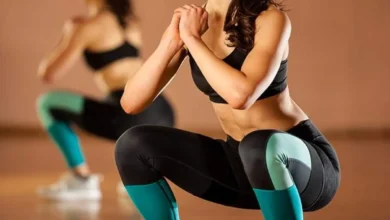
1. The Foundation: Squats (Lower Body)
Squats are the “king” of lower-body exercises. They target the quadriceps, hamstrings, and glutes while requiring significant core stability.
- The Form: Stand with feet shoulder-width apart. Lower your hips as if sitting in an invisible chair, keeping your chest upright and your knees tracking over your toes.
- Variation: For an added challenge, try Jump Squats to build explosive power.
- Note : For better results aim to exercise till failure
ALSO READ
2. The Upper Body Push: Push-Ups
The classic push-up is a masterclass in total-body tension. It builds the chest, shoulders, and triceps while forcing the core to act as a stabilizer.
- The Form: Maintain a straight line from your head to your heels. Lower your chest until it nearly touches the floor, then drive through your palms to return to the top.
- Variation: If standard push-ups are too difficult, drop to your knees. If they are too easy, try Diamond Push-Ups (hands close together) to target the triceps.
3. The Posterior Chain: Superman and Glute Bridges
Since “pulling” movements are difficult without equipment, we focus on the muscles of the back and the posterior chain.
- Superman: Lie face down and lift your arms and legs off the ground at once. This strengthens the lower back and shoulders.
- Glute Bridges: Lie on your back with knees bent and feet flat wide spread. Lift your hips toward the ceiling, squeezing your glutes at the top. This counteracts the effects of sitting all day. If you do not feel the workout in the glutes try adjusting the posture by spreading the legs less or m ore
4. The Lunging Pattern: Reverse Lunges
Lunges improve balance and unilateral (single-leg) strength.
- The Form: Step backward with one foot and lower your back knee toward the floor. Reverse lunges are often gentler on the knee joints than forward lunges.
- Variation: Try Lateral Lunges (stepping to the side) to engage the inner and outer thighs.
5. Total Body Integration: Mountain Climbers
To bridge the gap between strength and cardio, mountain climbers are essential.
- The Form: From a high plank position, drive your knees toward your chest in a running motion. This torches the core while improving shoulder endurance.
Phase 2: Structuring Your Routine
A list of exercises is only effective if structured correctly. For home workouts, the AMRAP (As Many Rounds As Possible) or Circuit Training methods work best.
The “Radiant Circuit” Routine:
Perform each exercise for 45 seconds, followed by 15 seconds of rest. Complete the entire circuit 4 times.
- Squats
- Push-Ups
- Reverse Lunges
- Glute Bridges
- Mountain Climbers
- Plank Hold
Phase 3: The “Glow” – Recovery and Nutrition
A full-body workout is the stimulus, but the “glow” and the muscle growth happen during recovery.
- Hydration: Water is the most underrated fitness “supplement.” It keeps joints lubricated and helps transport nutrients to the muscles you just worked. You ought to be hydrated everyday.
- Protein and Whole Foods: Support your efforts with nutrient-dense meals. Ingredients like lean proteins, leafy greens, and complex carbohydrates provide the building blocks for tissue repair.
- Consistency over Intensity: You don’t need to work out for two hours. A focused, 20-minute session performed four times a week is far more effective than a grueling two-hour session performed once a month.
Creating a Home Fitness Environment
To stay motivated when your “gym” is also your living space, create a dedicated zone. Even clearing a small area can mentally signal to your brain that it is time to focus. Put on a high-energy playlist, leave your phone in the other room, and commit to the movement.
JOIN OUR WHATSAPP GROUP FOR MORE UPDATES
conclusion
Bodyweight fitness is the ultimate form of physical freedom. It removes the excuses of “no time” or “no equipment” and puts your health back in your own hands, at your own time. By mastering these fundamental movements, you aren’t just changing how you look; you are building a resilient, capable body that can handle the demands of daily life with ease.
Start today, right where you are. Your future self will thank you for the first step you made.